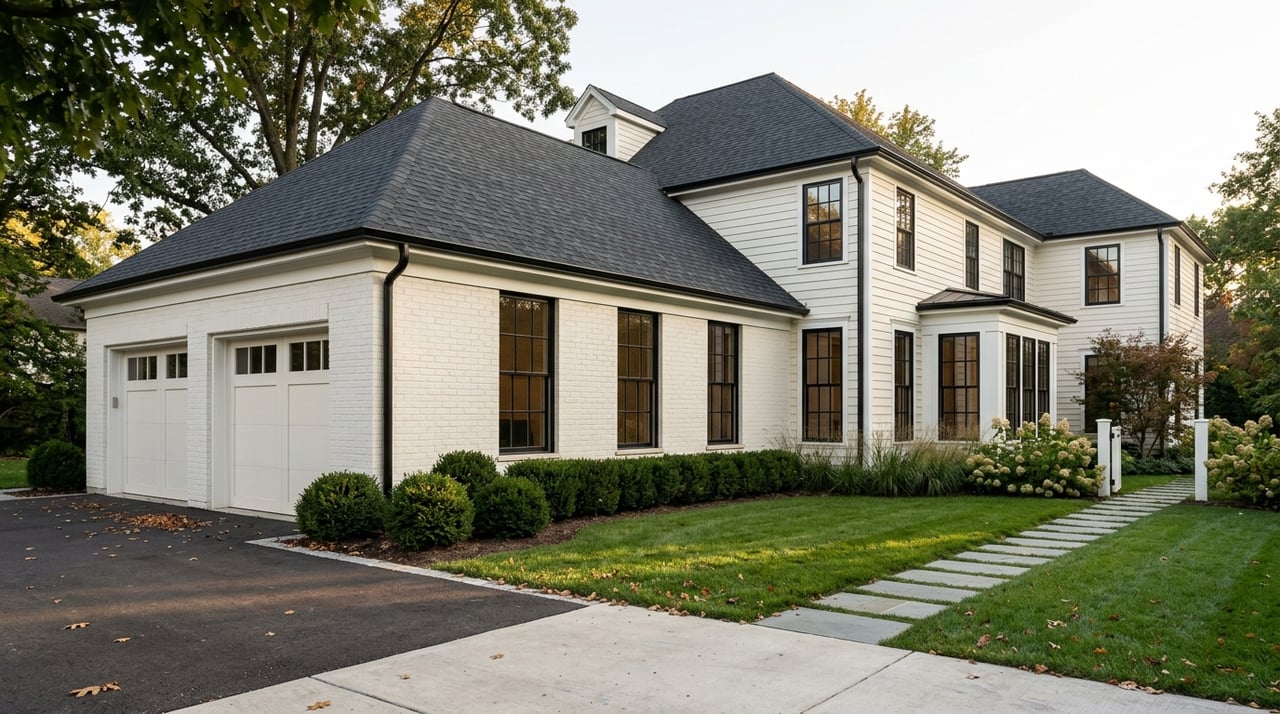
Wondering whether Cranford is the right place to level up your next home purchase? If you are outgrowing your current space, weighing commute needs, or trying to decide between charm and convenience, Cranford deserves a close look. The town offers an established suburban setting, a commuter-friendly location, and a housing stock with both renovation potential and select turnkey options. Let’s take a practical look at what that means for you.
Why Cranford Appeals to Move-Up Buyers
Cranford is a 4.8-square-mile town in Union County with NJ Transit rail and bus access, a historic housing base, and a downtown that the township says has seen significant investment and transit-oriented development. According to the township, 72.4% of housing units are detached single-family homes, which helps explain why many buyers consider Cranford when they want more house without jumping to the very top end of the suburban market.
The town also has an established feel rather than a brand-new one. Cranford’s housing plan shows that 82% of homes were built before 1970, which means your search may include everything from updated vintage homes to properties that still need work. You can learn more from the township’s community overview and its housing plan data.
Lot Sizes Vary More Than You Might Expect
One of the biggest questions move-up buyers ask is simple: how much land do you actually get in Cranford? The answer depends heavily on the part of town and the zoning district. Cranford’s zoning code sets minimum lot sizes for detached homes from 5,000 square feet in R-5 up to 12,000 square feet in R-1, with several steps in between.
That range helps explain why some streets feel more compact while others feel noticeably more spacious. If lot size matters to you, it is worth studying each property in context rather than assuming all of Cranford offers the same amount of outdoor space. The township’s zoning bulk requirements show that variation clearly.
What current examples suggest
Recent listings and sales reflect that wide spread. For example, 211 High St was listed with a 4,591-square-foot lot, while 37 Broad St sat on 5,227 square feet and traded in the mid-$600,000s. On the larger side, 112 Cranford Ave was marketed with a 9,583-square-foot lot, while homes like 6 Franklin Ave and 626 Lincoln Park E were tied to lots of about 0.33 to 0.39 acres.
The takeaway is straightforward. Cranford can absolutely offer more land as you move up, but larger lots are available by search strategy, not by default. If outdoor space is one of your top priorities, you will want to be selective about location, block, and property type.
Renovation Potential Is Part of the Story
If you are open to improving a home over time, Cranford becomes even more interesting. The town’s age profile supports that. The 2023 ACS-based housing plan says 30.8% of homes were built in 1939 or earlier, 23.9% in the 1950s, and only 0.5% of units were built in 2020 or later.
That does not automatically mean homes are in poor condition. In fact, the township describes the housing stock as generally sound. What it does mean is that many buyers in Cranford are choosing between updated older homes, partially improved homes, and properties with clear room to add value.
Turnkey exists, but it is limited
Cranford still offers both ends of the market. 6 Franklin Ave was marketed as new construction on 0.33 acres, while 626 Lincoln Park E sold after major renovations on a 0.39-acre lot. At the same time, there are older in-town homes on smaller lots that continue to trade at lower price points.
For you as a move-up buyer, this creates options. You may find a more polished, lower-maintenance home, or you may choose an older property with character and improve it over time. The right fit often depends on whether you value immediate finish level more than future upside.
Know the permitting reality
If you are considering a home with expansion or renovation potential, Cranford’s permit process matters. The township says a zoning permit is required for many types of improvements, including additions, decks, fences, pools, driveways, HVAC work, and new construction. It also notes that some application-to-permit timelines can run 4 to 5 months.
That does not make renovation a bad idea. It simply means you should approach any value-add plan with realistic timing and careful due diligence. The township’s FAQ page is a useful starting point for understanding that process.
Pricing Suggests a Real Step Up
Move-up buyers are often looking for a town that feels like progress without reaching the highest pricing tier in the area. Cranford may fit that middle ground. According to Zillow’s Cranford home value data, the typical home value on March 31, 2026 was $764,302, up 7.1% year over year.
That same source showed 20 homes for sale and 11 new listings, which points to a market where supply can still feel tight. Meanwhile, Cranford’s 2023 ACS median owner-occupied home value was $635,800, and 73.7% of owner-occupied homes were valued between $500,000 and $999,999. Only 4.7% were valued at $1 million or more.
How Cranford compares nearby
The same Zillow value snapshot placed Cranford below some nearby towns in the same suburban corridor. Zillow reported typical values of $1,248,283 in Westfield and $827,717 in Scotch Plains, compared with Cranford’s $764,302. That suggests Cranford may offer a more accessible move-up option for buyers who want an established Union County setting without stretching into a higher price tier.
This is not a formal affordability study, but it is a useful market signal. If you are trying to balance house size, condition, commute, and long-term value, Cranford may offer more flexibility than some neighboring markets.
The Commute Works Best for Certain Buyers
Commute fit is one of the most important parts of the move-up decision, especially if you are balancing office days with remote work. Cranford Station is on NJ Transit’s Raritan Valley Line. According to NJ Transit’s Cranford Station page, the line offers direct service to Newark Penn Station, while trips to New York or Hoboken generally require a transfer at Newark Penn.
The weekday schedule referenced by NJ Transit showed examples of early-morning trips from Cranford to Newark Penn in about 21 to 22 minutes. For some buyers, that is a strong practical advantage. For others, especially those who want the simplest one-seat ride into Manhattan, it may feel like a compromise.
Regional access adds flexibility
The township also highlights access to the Garden State Parkway through exits 136 and 137. Cranford is described by the township as being about ten miles from Newark Liberty International Airport and about twenty miles from Manhattan. You can see those details in the township’s natural resources inventory document.
That combination can work well if your routine includes hybrid commuting, regional driving, or regular airport travel. In other words, Cranford’s location is strongest for buyers who value a practical all-around position, not just a Manhattan rail shortcut.
When Cranford Makes Sense
Cranford may be the right next step if you want an established town with a strong single-family housing base, commuter access, and homes that offer either renovation upside or selective turnkey appeal. It is especially worth considering if you are comfortable with older housing stock and want choices beyond cookie-cutter new builds.
It may be less compelling if your top priority is a large lot in every price band or the easiest possible direct rail ride into Manhattan. In those cases, your search may need to widen. But if you value character, flexibility, and long-term potential, Cranford stands out as a thoughtful move-up option in Union County.
If you are weighing whether Cranford fits your next chapter, working with an agent who understands both presentation and property fundamentals can make the decision much clearer. Kristina Baez brings a calm, strategic approach along with insight into construction quality, renovation potential, and long-term value so you can move forward with confidence.
FAQs
Is Cranford a good town for move-up buyers?
- Cranford can be a strong option for move-up buyers who want an established suburban setting, a large share of single-family homes, commuter access, and a mix of updated and value-add properties.
Do Cranford homes usually come with large lots?
- Not always. Cranford has a wide range of lot sizes, with zoning minimums for detached homes running from 5,000 to 12,000 square feet, so lot size depends a lot on the property and location.
Is Cranford better for turnkey homes or renovation projects?
- Cranford leans toward older housing stock, so renovation potential is a major part of the market, though there are also updated homes and some newer construction opportunities.
How expensive is Cranford compared with nearby towns?
- Based on Zillow’s March 31, 2026 data, Cranford’s typical home value was lower than Westfield’s and lower than Scotch Plains’, which may make it a more accessible move-up option in the same corridor.
Is Cranford convenient for commuting to Newark or New York?
- Cranford is especially practical for Newark-bound travel because NJ Transit offers direct service to Newark Penn, while trips to New York generally require a transfer at Newark Penn.
Do you need permits for home improvements in Cranford?
- Yes. The township says zoning permits are required for many improvements, including additions, decks, fences, pools, driveways, HVAC work, and new construction, and some timelines can take several months.